

Spending money has never been easier. A saved credit card, a one-tap checkout, and a late-night notification can turn an idle thought into a cardboard box sitting on your doorstep forty-eight hours later.
If you are wondering how to spend less money, the answer rarely requires giving up your morning coffee, tracking every transaction in a ledger, or questioning every small joy.
Sustainable personal finance isn’t about extreme austerity. It is about making mindless spending slightly harder and everyday saving almost effortless. When you introduce small, intentional pauses into your daily environment, you quietly protect your cash flow without making life feel restricted.
The Friction Fix: How to Spend Less Money on Impulse Buys
Digital shopping is engineered to eliminate hesitation. Autofill addresses, saved card details, algorithmic recommendations, and one-click buying remove the natural pauses that once gave us time to reconsider.
Frictionless convenience is wonderful when you need to reorder laundry detergent. But when you are browsing out of evening boredom or reacting to a flash-sale email, zero friction makes spending completely automatic.
If you want to learn how to avoid impulse buying, the most effective strategy is to put physical friction back into the checkout loop.
1. Remove Saved Payment Details
Delete your credit card information from shopping apps and browser autofill settings.
When you want to purchase something non-essential, you will have to stand up, retrieve your wallet from another room, and type sixteen digits by hand. Those extra thirty seconds break the dopamine loop. More often than not, you will realize the item isn’t worth the effort of getting off the couch.
2. The 72-Hour Wishlist Rule
When an item catches your attention online, add it to a plain text note or wishlist rather than clicking “buy now.”
Step away for three full days. When the 72 hours pass, ask yourself:
- Do I still genuinely want this?
- Will this solve an actual problem in my weekly routine?
- Does it fit comfortably into my spending allowance?

This simple buffer is a gentle, realistic way to master how to stop impulse shopping. You aren’t banning purchases; you are simply giving temporary excitement room to cool so genuine priorities can surface.
Invisible Overhead: Practical Ways to Save Money at Home
We tend to direct our financial guilt toward visible discretionary purchases while ignoring the quiet leaks draining our accounts in the background.
A neglected subscription, an inefficient utility habit, or phantom electricity draw costs real money month after month. Instead of policing your daily habits, focus on practical ways to save money that require one decision and continue paying dividends on autopilot.
Audit the Quiet Monthly Leaks
Review your bank statement for recurring charges you no longer notice:
- Streaming platforms you haven’t opened this month.
- App subscriptions renewed after a free trial.
- Gym or club memberships you rarely use.
Canceling two unused services is one of the most reliable, smart ways to save money because it lowers your monthly overhead permanently without requiring ongoing willpower.
Low-Effort Energy Adjustments
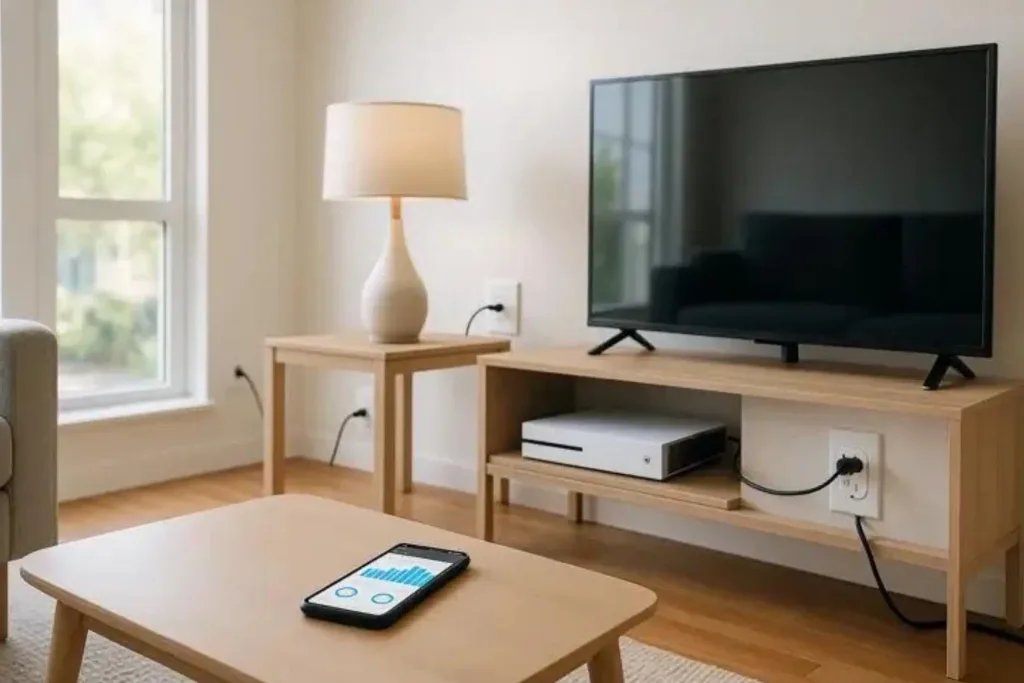
You don’t need to turn your living space into an efficiency lab to see results. Simple environmental defaults show how to cut household expenses naturally:
- Smart power strips: Plug media consoles, monitors, and chargers into switched outlets to eliminate standby phantom load.
- Thermostat baselines: Adjust your thermostat by two degrees—slightly cooler in winter, slightly warmer in summer.
- Water heater temperatures: Check your water heater’s base dial; dropping it to a manufacturer-recommended 120°F (49°C) prevents overheating standby water.
These small shifts offer easy ways to save electricity without forcing you to think about every light switch.
Connect Small Savings to Something Meaningful
Cutting back feels restrictive only when your money has nowhere purposeful to go.
Perhaps you are setting aside money to cushion an emergency fund. Perhaps you are gathering saving for a house tips to make a future home purchase possible. Or perhaps you simply want enough breathing room so an unexpected car repair doesn’t derail your month.
Give your reclaimed money a dedicated destination. If removing an unused streaming service and pausing a few impulse buys preserves $75 this month, set up an automatic transfer sending that exact $75 to a dedicated high-yield savings account on payday.
Over a year, that quiet habit preserves nearly $1,000 without a moment of deprivation.
Understanding how to stop living beyond your means is not about moral discipline or living on less than you need. It is about designing an environment where your money naturally supports the life you actually want to live.
Your 3-Minute Starter Action
Tonight, tackle a single digital spending trigger:
Open your mobile browser or primary shopping app, navigate to account settings, and delete your saved payment method.
That is the entire task.
Tomorrow, when a tempting purchase appears on your screen, that single layer of friction will buy you the time you need to decide with clarity. One small pause is all it takes to make how to stop impulse buying a natural, unconscious habit.