
You try on a shirt on Tuesday morning. It pulls awkwardly across your shoulders, feels scratchy around the neck, or simply doesn’t fit your daily life anymore. You take it off, reach for another option, and instinctively hang the shirt right back up.
Sound familiar?
Learning how to declutter clothes does not have to mean spending an entire Saturday emptying your wardrobe onto the floor. More often, it starts with one small behavioral shift: stop returning clothes to the rack when you already know you don’t enjoy wearing them.
The Donation Bag by the Door turns that daily realization into an effortless habit, one garment at a time.
Why the Big Closet Purge Often Backfires
The traditional approach to closet editing sounds productive: empty every hanger, sort clothes into giant piles, try everything on, and ruthlessly decide what stays.
In reality, somewhere between the forgotten denim and the expensive jacket worn twice, decision fatigue takes over.
Every item demands emotional energy: Does this still fit? Will I wear it next year? Wasn’t it expensive? What if I need it someday?
That last question keeps unused garments trapped on hangers for years. We often hold on to clothes not because they serve us, but because letting them go forces us to confront sunk-cost guilt. The money was spent long ago, yet keeping the unworn item feels like delaying the financial mistake.
Before long, the wardrobe feels unmanageable. You start researching how to make more space in closet setups or how to make more room in closet racks, when the genuine issue is simply that inactive volume needs an exit.
You do not need a weekend overhaul. You need an easy exit ramp.
The Donation Bag by the Door: How to Declutter Clothes Gradually
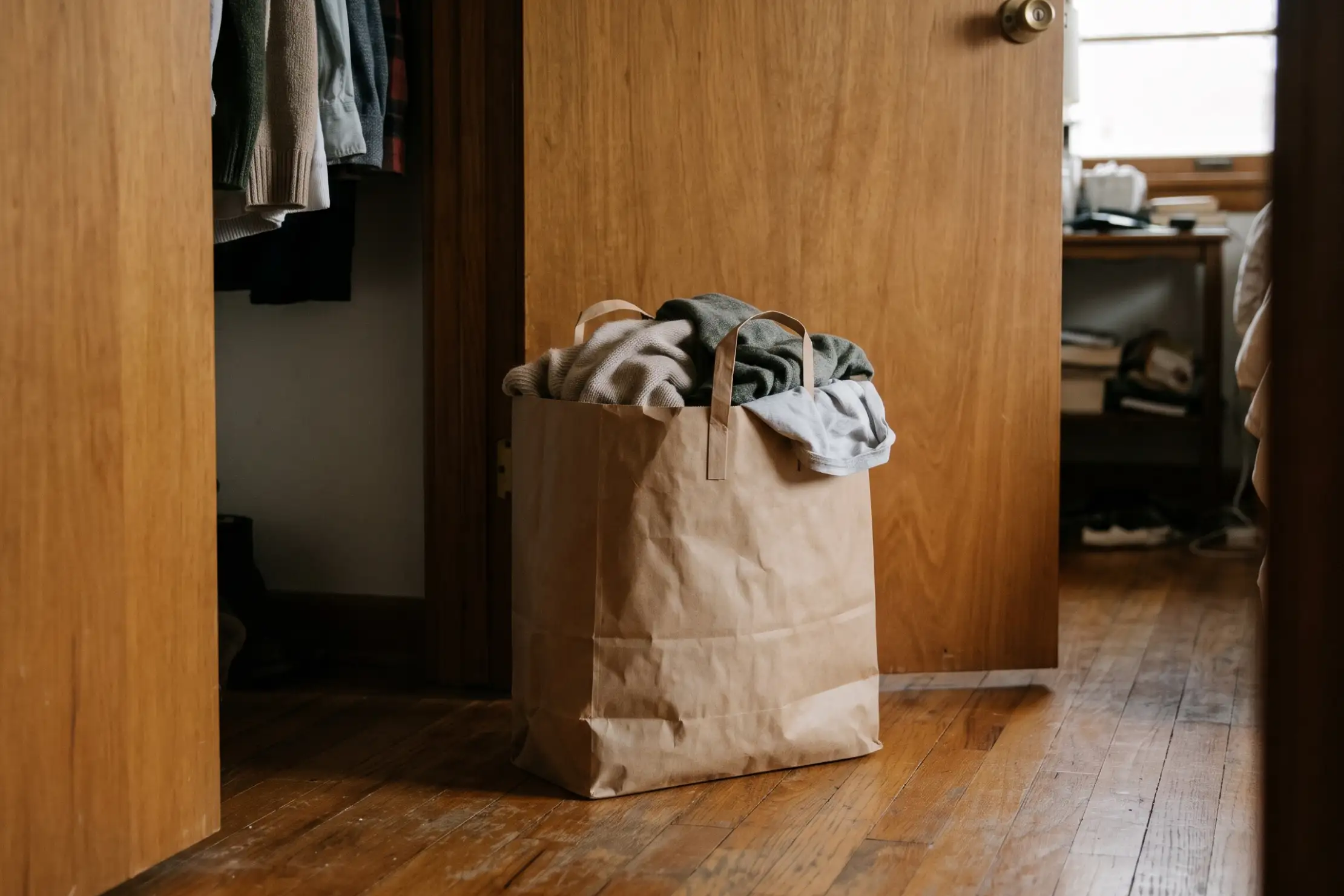
Take an ordinary brown paper grocery bag and place it in the corner of your closet or beside your bedroom doorway.
That is your donation bag.
The rule is simple: whenever you put on something that pinches, itches, sags, or proves to be an unneeded duplicate, drop it directly into the bag.
Do not re-hang it. Do not tell yourself you will give it another chance next month. Do not initiate an internal debate. If it fails the test on a Tuesday morning, give it an immediate exit.
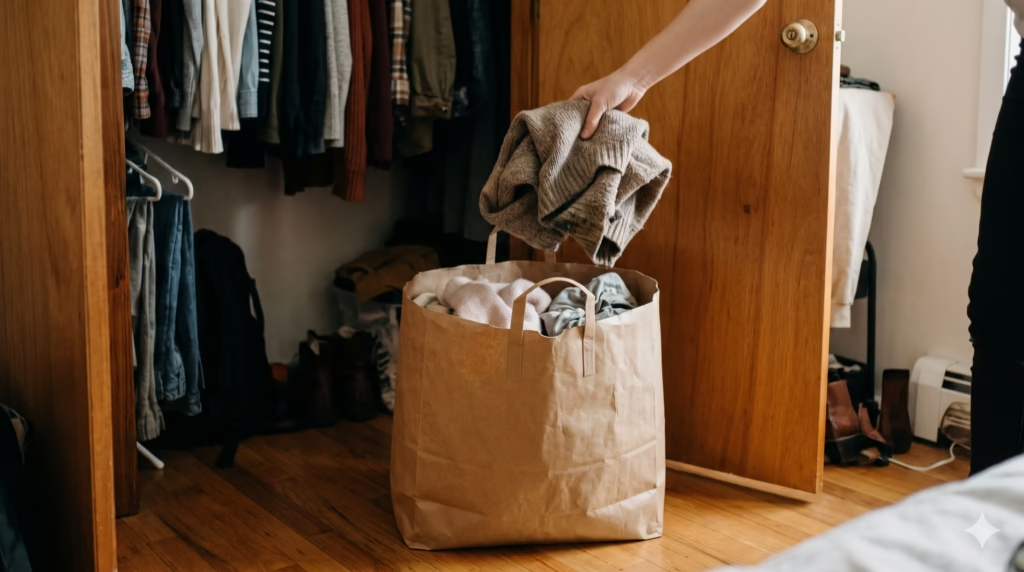
This is the real-time friction test. Rather than making theoretical guesses during a weekend clean-out, you respond to how fabric actually behaves when you get dressed. Your everyday routine becomes your most accurate wardrobe filter.
A Small Closet Needs Less Volume, Not More Storage
When people search for how to organize a small closet with lots of clothes, the immediate reflex is to shop for more velvet hangers, hanging cubbies, or acrylic bins. The same happens when trying to figure out how to organize a small walk in closet.
Storage accessories cannot make uncomfortable clothes wearable.
Before purchasing organizational tools, allow the donation bag to do the heavy lifting. As passive volume leaves your space, you naturally create breathing room without spending money on container solutions.
What to Do With Unwanted Clothes
Once your bag fills, do not let it become permanent decor. Keep it in motion by dropping it off during an errand you are already running.
If you are wondering what to do with unwanted clothes and asking yourself, what do I do with old clothes?, let their physical condition guide their destination:
- Wearable items: Pass clean, gently worn garments to local community shelters, family resource centers, or thrift drop-offs.
- Damaged or thinned items: If you are unsure what to do with worn out clothes, research local textile recycling bins. Many civic drop-offs and apparel retailers accept clean, unwearable fabrics to be shredded into insulation or industrial padding.
- Torn materials: For those wondering what to do with ripped clothes, turn 100% cotton tees and flannel into reusable household dusting cloths before discarding them.
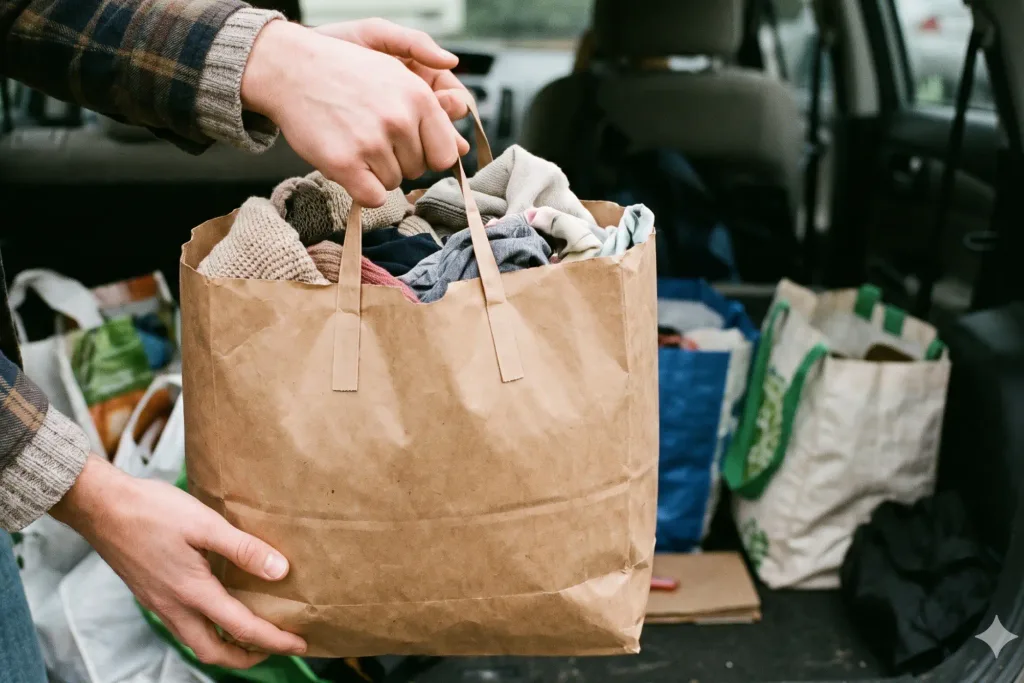
Learning what to do with old clothes that cannot be donated prevents post-declutter paralysis and keeps textiles out of the regular trash.
The Mindful Spending Connection: Seeing What You Own
A packed closet creates a familiar paradox: an abundance of garments, but “nothing to wear.”
When pieces you dislike sit beside items you love, finding an outfit requires constant visual filtering. You may even purchase another basic tee or pair of black trousers simply because clutter hid the ones you already owned.
This is closet blindness.
As unwanted clothes leave through the paper bag, your actual wardrobe becomes visible. Getting dressed takes two minutes. You stop browsing online sales out of wardrobe frustration, and you realize you never needed to figure out how to make a bedroom into a closet—you just needed your existing space to breathe.
Your 3-Minute Starter Action
Tonight, find one plain paper shopping bag.
Set it in the corner of your closet or near the door. Walk over, pull out exactly one garment you avoided wearing this week, and drop it inside.
That is all.
Leave the bag in place. You do not have to finish your entire wardrobe tonight. You only need to stop hanging back up the things that don’t belong in your life.